
Drafting in Open Water Swimming The Hidden Advantage
n open-water swimming, every small advantage can make a difference. One of the most effective techniques used by experienced swimmers is drafting—positioning yourself close behind or beside another swimmer to reduce water resistance and conserve energy.
When used correctly, drafting can significantly reduce the effort required to maintain the same speed. For a long-distance swimmer, this can mean saving valuable energy for the final stages of the race, when fatigue becomes a major factor.
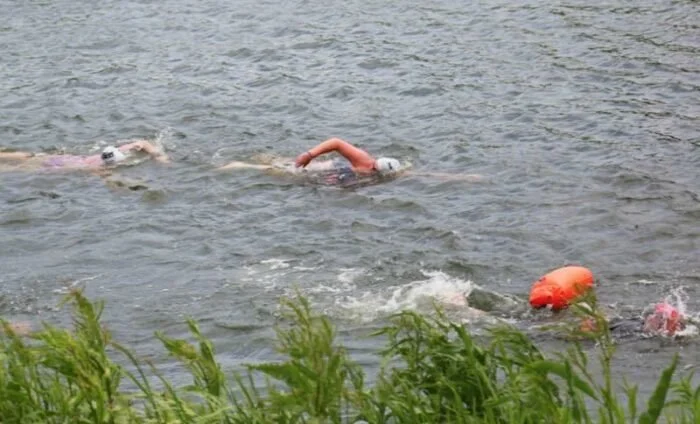
But drafting is much more than simply swimming behind another athlete. It requires positioning, awareness, timing, technique, and respect for the swimmer around you.
1. Drafting Behind the Feet
The most common and easiest position is to swim directly behind another swimmer.
Your head and body should remain close to the swimmer's feet without constantly touching their toes. The goal is to stay within the swimmer's disturbed water while maintaining your own stroke rhythm.
This position has several advantages:
It is relatively easy to maintain.
It allows you to conserve energy.
You are less likely to interfere with the swimmer in front.
You can use the swimmer's line to help maintain your direction.
However, don't become completely dependent on the swimmer ahead. Always remain responsible for your own navigation.
2. Side Drafting
Another option is to position yourself alongside the lead swimmer, around their hip or upper leg, where you can take advantage of the water movement created by their body.
Side drafting can be very effective, but it requires greater skill and awareness.
The advantages can include:
Strong energy savings.
Access to the swimmer's bow wave.
An opportunity to maintain speed without increasing your own effort.
However, there is an important consideration: side drafting can affect the swimmer you are drafting from. Swimming too close to their hip can create additional resistance for them and may lead to accidental contact between arms and bodies.
For this reason, side drafting should be used carefully, particularly during crowded races.
3. Finding the Right Swimmer
Not every swimmer is a good person to draft behind.
Look for an athlete who is:
Swimming at your desired pace.
Maintaining a relatively straight line.
Comfortable swimming at a consistent rhythm.
Ideally, slightly faster than your normal sustainable pace.
Avoid choosing a swimmer who repeatedly changes direction, stops, slows dramatically, or swims unpredictably.
A good draft partner can make your race easier. A poor one can make you work harder.
4. Closing the Gap
Once you identify your target, don't gradually spend excessive energy trying to reach them.
Use a short, controlled increase in speed to enter the drafting zone. Once you are in position, settle immediately back into your efficient race rhythm.
The mistake many swimmers make is accelerating too hard to catch another athlete and then continuing at that higher intensity after reaching the draft.
The objective is to save energy—not waste it getting into position.
5. Adjust Your Technique
When drafting behind another swimmer, your normal stroke may require a small adjustment.
You should maintain:
A relaxed stroke.
A stable body position.
Good rhythm.
Controlled breathing.
Efficient kick.
If you are directly behind their feet, slightly widening your hand entry can help reduce the chance of repeatedly touching their legs.
Remember: drafting should improve your efficiency, not destroy your technique.
6. Don't Forget to Look Where You Are Going
One of the biggest dangers of drafting is becoming too focused on the swimmer ahead.
A swimmer may be moving in the wrong direction.
You should still sight regularly to check:
Buoys
Shoreline
Course markers
Turns
Other swimmers
Safety boats
Trust the draft—but trust your own navigation more.
Following another swimmer blindly can turn an energy-saving strategy into a very expensive mistake.
7. Drafting Is Also a Tactical Skill
At the highest level, drafting becomes part of race strategy.
A swimmer may choose to remain behind another athlete during the middle portion of a race, conserving energy before increasing the pace toward the finish.
In a 5 km, 10 km, or longer open-water race, the ability to save energy early can become extremely important during the final kilometers.
The strongest swimmer is not always the swimmer who leads from the beginning.
Sometimes, the smartest swimmer is the one who uses the water, chooses the right position, protects their energy, and waits for the right moment to attack.
Safety and Sportsmanship
Drafting should always be performed with respect for other competitors.
Avoid:
Repeatedly hitting another swimmer's feet.
Pulling on another swimmer.
Deliberately obstructing another athlete.
Swimming dangerously across another swimmer's path.
Making sudden movements in crowded areas.
Open-water swimming requires both competition and cooperation. Good drafting is a tactical skill, but good sportsmanship must always come first.